Infrared Roof Scanning for Columbus Commercial Buildings

Scroll
Infrared Roof Scanning for Columbus Commercial Buildings

Capability for Columbus commercial properties

Infrared Roof Scanning for Columbus Commercial Buildings

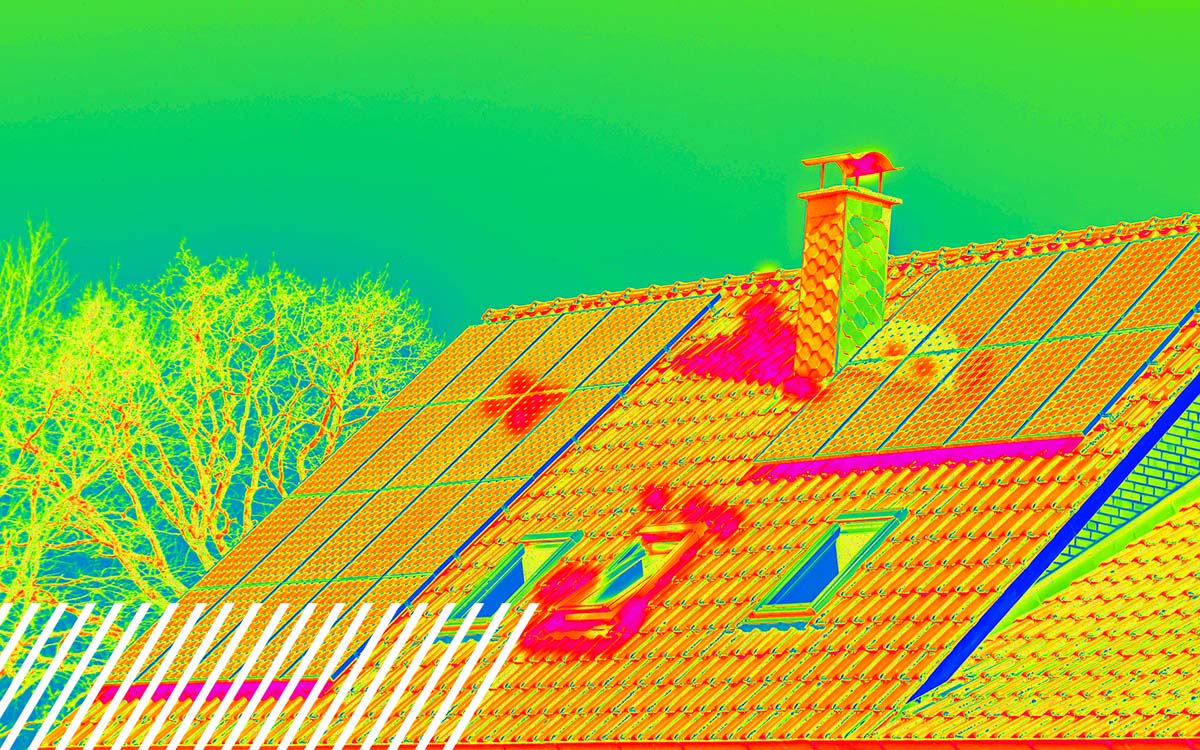
After sundown, wet insulation releases stored heat slower than dry insulation — creating a thermal signature an infrared camera reads as a heat map across the entire roof surface. We conduct post-sunset infrared scans on Columbus commercial roofs to map wet sections before replacement scopes are written.

Infrared roof scanning is a non-destructive diagnostic technique that exploits a physical property of water-saturated insulation: it retains solar heat longer than dry insulation after the sun goes down. An infrared camera pointed at a commercial roof two to four hours after sunset captures the differential — wet sections appear warmer, dry sections appear cooler. The result is a thermal heat map of the entire roof surface that shows moisture distribution without cutting the membrane.

Infrared Roof Scanning for Columbus Commercial Buildings decision points

After sundown, wet insulation releases stored heat slower than dry insulation — creating a thermal signature an infrared camera reads as a heat map across the entire roof surface. We conduct post-sunset infrared scans on Columbus commercial roofs to map wet sections before replacement scopes are written.

What gets verified on the roof

Infrared roof scanning is a non-destructive diagnostic technique that exploits a physical property of water-saturated insulation: it retains solar heat longer than dry insulation after the sun goes down. An infrared camera pointed at a commercial roof two to four hours after sunset captures the differential — wet sections appear warmer, dry sections appear cooler. The result is a thermal heat map of the entire roof surface that shows moisture distribution without cutting the membrane.

How the Columbus property context affects the scope

Owner-side support is centered on defensible roof information: photos, measurements, moisture findings, repair history, bid assumptions, and budget timing.

What ownership receives

The output is written so owners can compare options, defend budgets, manage procurement, and keep roof information useful after the immediate decision is made.

Questions

Infrared Roof Scanning for Columbus Commercial Buildings questions

How much roof area can an infrared scan cover in one night?

A single surveyor can cover 20,000 to 40,000 square feet in a 90-minute survey window under good conditions. For larger roofs — the distribution centers and logistics facilities in the Rickenbacker corridor that run 100,000 to 400,000 square feet — we schedule multi-night surveys or use two surveyors to cover the area in a single night. The thermal window is fixed by daylight and ambient temperature, so scheduling is time-sensitive.

Can infrared scanning be done on any type of commercial roof system?

Infrared scanning works well on TPO, EPDM, PVC, and modified bitumen single-ply and multi-ply systems where the insulation layer is immediately below the membrane. It is less effective on ballasted systems — the river stone ballast absorbs and retains heat differently than membrane, making the thermal differential harder to read. For ballasted roofs, nuclear moisture testing is typically more reliable. We assess the roof system type before recommending an infrared survey.

Do you provide the thermal images themselves or just the interpretation?

Both. The deliverable includes the moisture distribution map (the interpreted output), the raw thermal image archive referenced to the roof zone diagram, the anomaly log with core validation results, and the survey conditions documentation. Building owners who want to share the raw thermal images with their own engineers or consultants receive the full archive in standard image format.

Talk through infrared roof scanning for columbus commercial buildings.

Share the building address, roof history, current concern, timing, and access constraints. We will give you a practical next step for inspection, repair, maintenance, coating, or replacement planning.

Contact Commercial Roofers of Columbus