
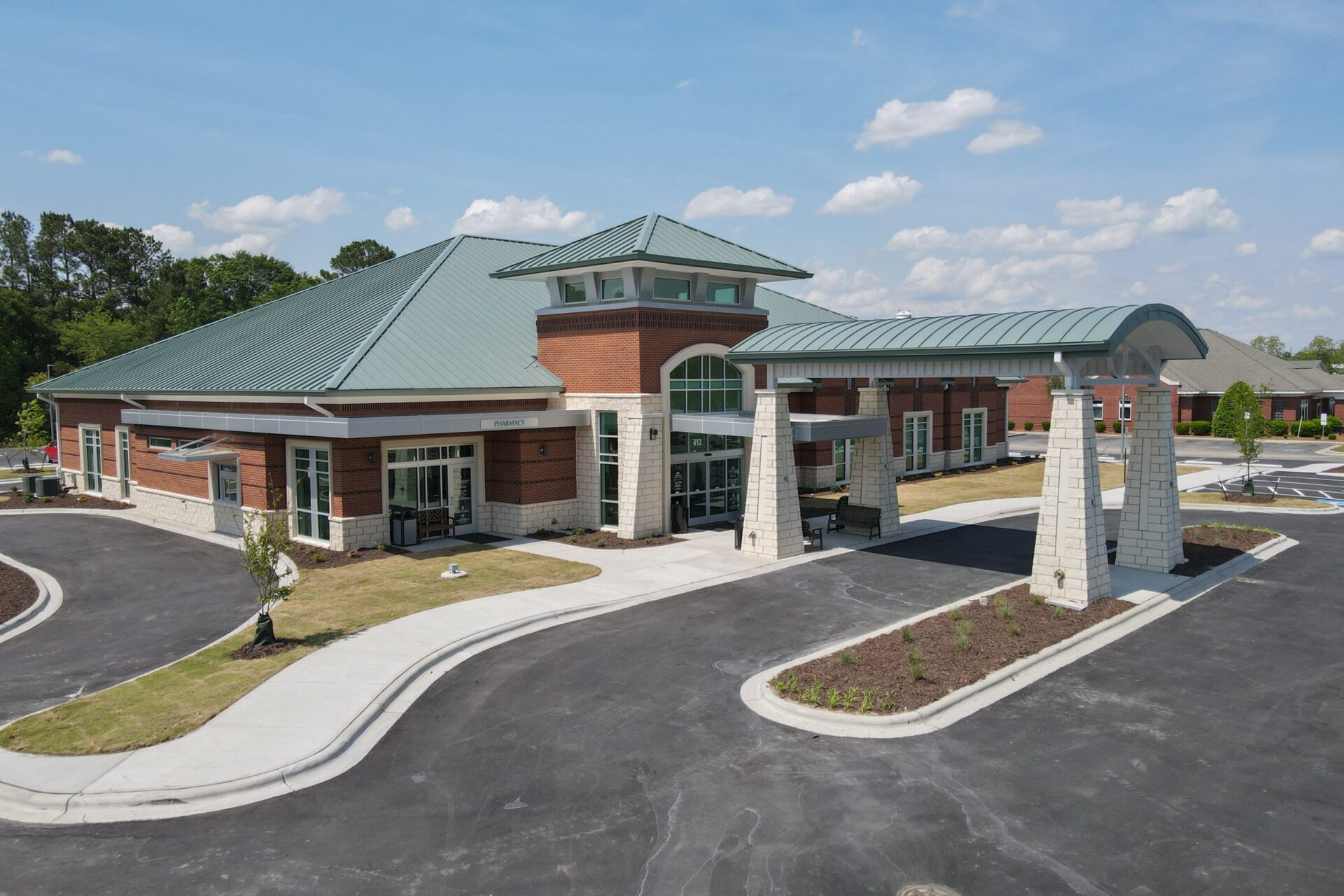
Medical Building Roofing

Scroll
Medical Building Roofing

Property Type for Columbus commercial properties

Medical Building Roofing

A hospital or medical building roof sits over some of the most sensitive spaces in any community: operating rooms, intensive care units, imaging suites, laboratories, and patient floors where a leak, an odor, or a vibration can compromise care. Roofing these buildings is fundamentally different from roofing a warehouse or a retail box. The work has to honor infection-control protocols, protect 24-hour critical-care continuity, and treat every penetration over a critical space as a zero-leak detail. On a medical roof, the waterproofing is only half the job; managing the construction environment around vulnerable patients and equipment is the other half.

Columbus is one of the Midwest's major medical centers, rooted in the Ohio State University Wexner Medical Center, Nationwide Children's Hospital, the Mount Carmel Health System, and OhioHealth, surrounded by a dense ring of medical office buildings serving Franklin County and the suburbs. These facilities sit in ASHRAE climate zone 5A, a cold and humid region that drives roughly 65 to 70 freeze-thaw cycles through every roof seam each year, adds winter snow and ice-dam loading, and exposes the membrane to humid summer heat. A medical roof in central Ohio has to deliver decades of leak-free performance over critical care while the building below never closes.

Medical Building Roofing decision points

A hospital or medical building roof sits over some of the most sensitive spaces in any community: operating rooms, intensive care units, imaging suites, laboratories, and patient floors where a leak, an odor, or a vibration can compromise care. Roofing these buildings is fundamentally different from roofing a warehouse or a retail box. The work has to honor infection-control protocols, protect 24-hour critical-care continuity, and treat every penetration over a critical space as a zero-leak detail. On a medical roof, the waterproofing is only half the job; managing the construction environment around vulnerable patients and equipment is the other half.

What gets verified on the roof

Columbus is one of the Midwest's major medical centers, rooted in the Ohio State University Wexner Medical Center, Nationwide Children's Hospital, the Mount Carmel Health System, and OhioHealth, surrounded by a dense ring of medical office buildings serving Franklin County and the suburbs. These facilities sit in ASHRAE climate zone 5A, a cold and humid region that drives roughly 65 to 70 freeze-thaw cycles through every roof seam each year, adds winter snow and ice-dam loading, and exposes the membrane to humid summer heat. A medical roof in central Ohio has to deliver decades of leak-free performance over critical care while the building below never closes.

How the Columbus property context affects the scope

The building type affects staging, work hours, tenant protection, rooftop equipment coordination, drainage review, access routes, and closeout documentation.

What ownership receives

The result is a property-specific roof plan that protects the building use while giving ownership a clear scope, schedule, access plan, and budget path.

Questions

Medical Building Roofing questions

How do you protect patients during a hospital roof replacement?

Through ICRA-driven infection control. We classify the project's risk with the facility's infection-control team, establish negative-air containment and barriers where needed, seal rooftop air intakes so debris and fumes are not drawn into the ventilation, and use HEPA filtration and strict dust control on the roof. The most disruptive work is sequenced and scheduled to minimize any exposure over sensitive areas, so patients are protected throughout.

Will roofing work create odors or vibration in operating rooms and imaging suites?

Not if it is planned correctly. We use low-odor, low-VOC adhesives and substitute cold-applied or self-adhered methods for strong-smelling or hot processes over sensitive spaces, and we schedule that work for off-hours. Over vibration-sensitive imaging and lab equipment we favor fully-adhered assemblies to reduce impact into the structure and coordinate any unavoidable fastening with the departments below.

How do you guarantee no leaks over critical care?

With redundant detailing and zero-leak design. Penetrations over operating rooms, ICUs, imaging, and critical electrical spaces get full-height reinforced curb flashing, sealed terminations, and backup waterproofing layers, and we frequently add electronic leak detection in the assembly so any breach is isolated to a small area before it ever reaches the ceiling. Tapered insulation eliminates ponding over those sensitive areas as well.

Talk through medical building roofing.

Share the building address, roof history, current concern, timing, and access constraints. We will give you a practical next step for inspection, repair, maintenance, coating, or replacement planning.

Contact Commercial Roofers of Columbus