
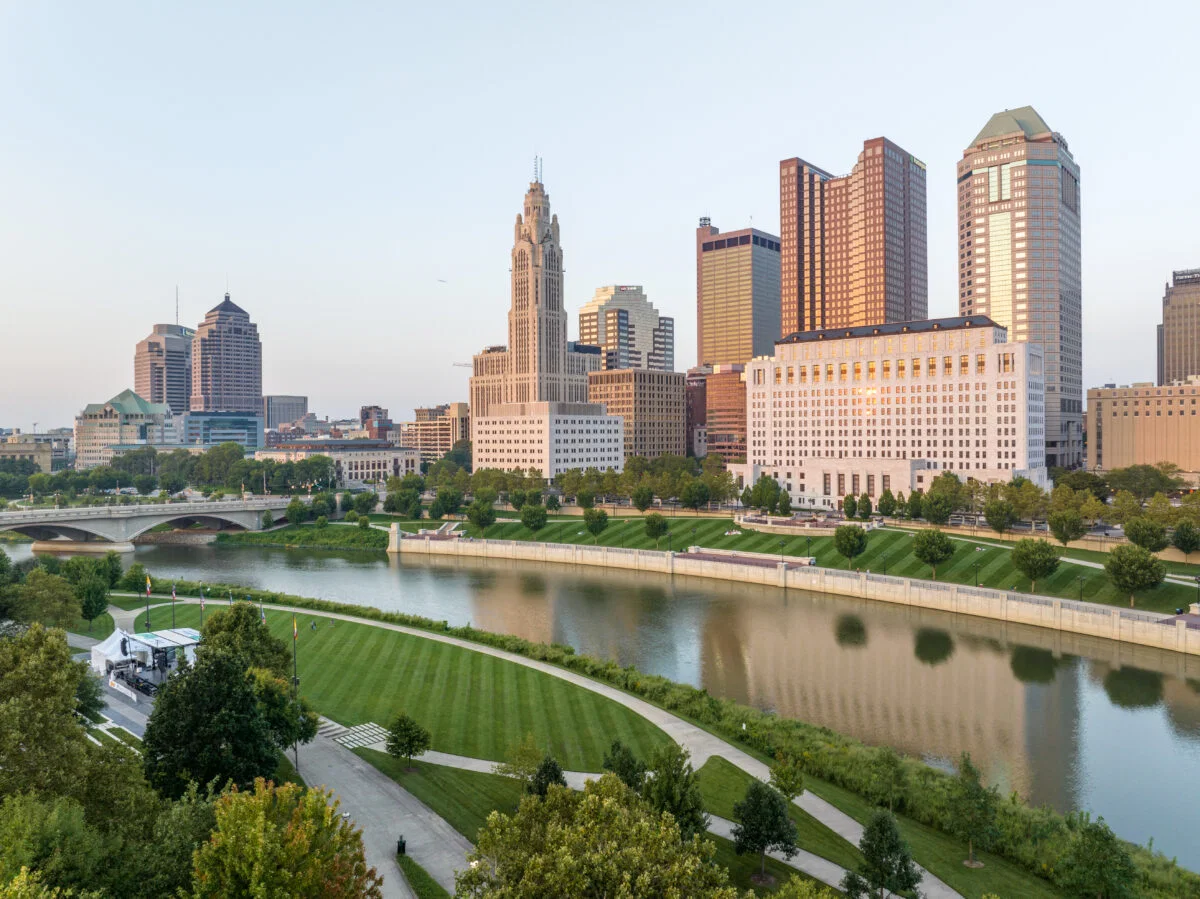
Downtown Columbus, OH

Scroll
Downtown Columbus, OH

Location for Columbus commercial properties

Downtown Columbus, OH

Downtown Columbus is the densest commercial roofing environment in central Ohio, and that density changes everything about how a roof is built, repaired, and replaced. The central business district packs high-rise office towers, mid-rise mixed-use, government and institutional buildings around Capitol Square, historic masonry blocks, and the redeveloped Arena District into a tight grid bounded by the Scioto River on the west and the interstate ring around the core. A reroof here is never just a roofing project — it is a logistics project. Material has to be hoisted high above an active street, crews phase the work around occupied office floors, and staging means coordinating closures and after-hours access in a place where there is no spare ground to lay anything down. This page is about those downtown-specific realities and how a commercial-only contractor handles them.

The roofs over the CBD are also some of the oldest and most varied in the region. Legacy towers carry built-up and modified-bitumen assemblies from earlier eras, plaza and podium decks sit over occupied space, and parapets and edge metal at height face wind exposure that a low suburban building never sees. Layer on central Ohio's climate — ASHRAE/IECC climate zone 5A, roughly 65 to 70 freeze-thaw cycles a year, and meaningful snow and ice loading — and downtown roofing becomes a discipline that rewards experience and punishes shortcuts. Below we walk through the building types in the core, the access and hoisting challenge that defines downtown work, the assemblies and details these buildings need, and how we keep occupied offices running while the roof over them is replaced.

Downtown Columbus, OH decision points

Downtown Columbus is the densest commercial roofing environment in central Ohio, and that density changes everything about how a roof is built, repaired, and replaced. The central business district packs high-rise office towers, mid-rise mixed-use, government and institutional buildings around Capitol Square, historic masonry blocks, and the redeveloped Arena District into a tight grid bounded by the Scioto River on the west and the interstate ring around the core. A reroof here is never just a roofing project — it is a logistics project. Material has to be hoisted high above an active street, crews phase the work around occupied office floors, and staging means coordinating closures and after-hours access in a place where there is no spare ground to lay anything down. This page is about those downtown-specific realities and how a commercial-only contractor handles them.

What gets verified on the roof

The roofs over the CBD are also some of the oldest and most varied in the region. Legacy towers carry built-up and modified-bitumen assemblies from earlier eras, plaza and podium decks sit over occupied space, and parapets and edge metal at height face wind exposure that a low suburban building never sees. Layer on central Ohio's climate — ASHRAE/IECC climate zone 5A, roughly 65 to 70 freeze-thaw cycles a year, and meaningful snow and ice loading — and downtown roofing becomes a discipline that rewards experience and punishes shortcuts. Below we walk through the building types in the core, the access and hoisting challenge that defines downtown work, the assemblies and details these buildings need, and how we keep occupied offices running while the roof over them is replaced.

How the Columbus property context affects the scope

Local roof planning accounts for building age, corridor exposure, freeze-thaw movement, rooftop equipment density, traffic access, and storm history.

What ownership receives

The recommendation is mapped to the building and surrounding Columbus-area conditions rather than a one-size roof package.

Questions

Downtown Columbus, OH questions

How do you get roofing material onto a downtown Columbus high-rise?

Most downtown towers require crane hoisting, with picks planned in advance and often permitted street or lane closures scheduled with the city. Because there is no ground lay-down space in the core, material stages in closed lanes, loading docks, or freight elevators, and heavy hoisting is typically scheduled for after hours or weekends to keep streets open during business hours.

Can you replace the roof while our offices stay open?

Yes. Occupied downtown buildings are reroofed in phases, with each zone torn off and made watertight within a controlled window so the building is never exposed. Interior finishes are protected, dust, odor, and noise are managed for tenants below, and disruptive work is scheduled for low-impact hours in coordination with building management.

Why does the roof edge matter so much on a tall building downtown?

Wind uplift increases with height and with the wind effects created by surrounding towers, and uplift failures almost always start at the edge. Edge metal, coping, and parapets tested to ANSI/SPRI ES-1, with enhanced perimeter and corner fastening verified to FM and UL ratings, keep wind from getting under the system and peeling it back.

Talk through downtown columbus, oh.

Share the building address, roof history, current concern, timing, and access constraints. We will give you a practical next step for inspection, repair, maintenance, coating, or replacement planning.

Contact Commercial Roofers of Columbus