Semiconductor Facility Roofing

Scroll
Semiconductor Facility Roofing

Industry for Columbus commercial properties

Semiconductor Facility Roofing

A semiconductor fab is one of the most unforgiving buildings a commercial roofer will ever work on. Inside, billions of dollars of tools manufacture features measured in nanometers in cleanrooms where a stray particle, a trace of moisture, or a few microns of unwanted vibration can scrap a wafer or knock a tool out of calibration. The roof over that environment is not a commodity — it is part of the contamination-control envelope, the vibration budget, and the business-continuity plan at once. Roofing a fab follows rules that look nothing like a distribution center, and central Ohio is now building these facilities at a scale the region has never seen.

The catalyst is Intel's Ohio One campus — the "Silicon Heartland" project rising in New Albany and Licking County — joined by Honda and the Honda–LG advanced-manufacturing and EV-battery roof plans anchored around Marysville, and a growing chip-and-supplier corridor across the New Albany and Licking County growth zone. These plants sit in ASHRAE/IECC climate zone 5A, absorb ~65–70 freeze-thaw cycles a year, carry real winter snow load, and stand on the eastern fringe of the Midwest hail belt where spring and summer storms can drop 1-inch-plus hail. A fab roof has to defeat all of that while production runs continuously underneath it, with zero tolerance for water intrusion that would be a nuisance anywhere else and a catastrophe here.

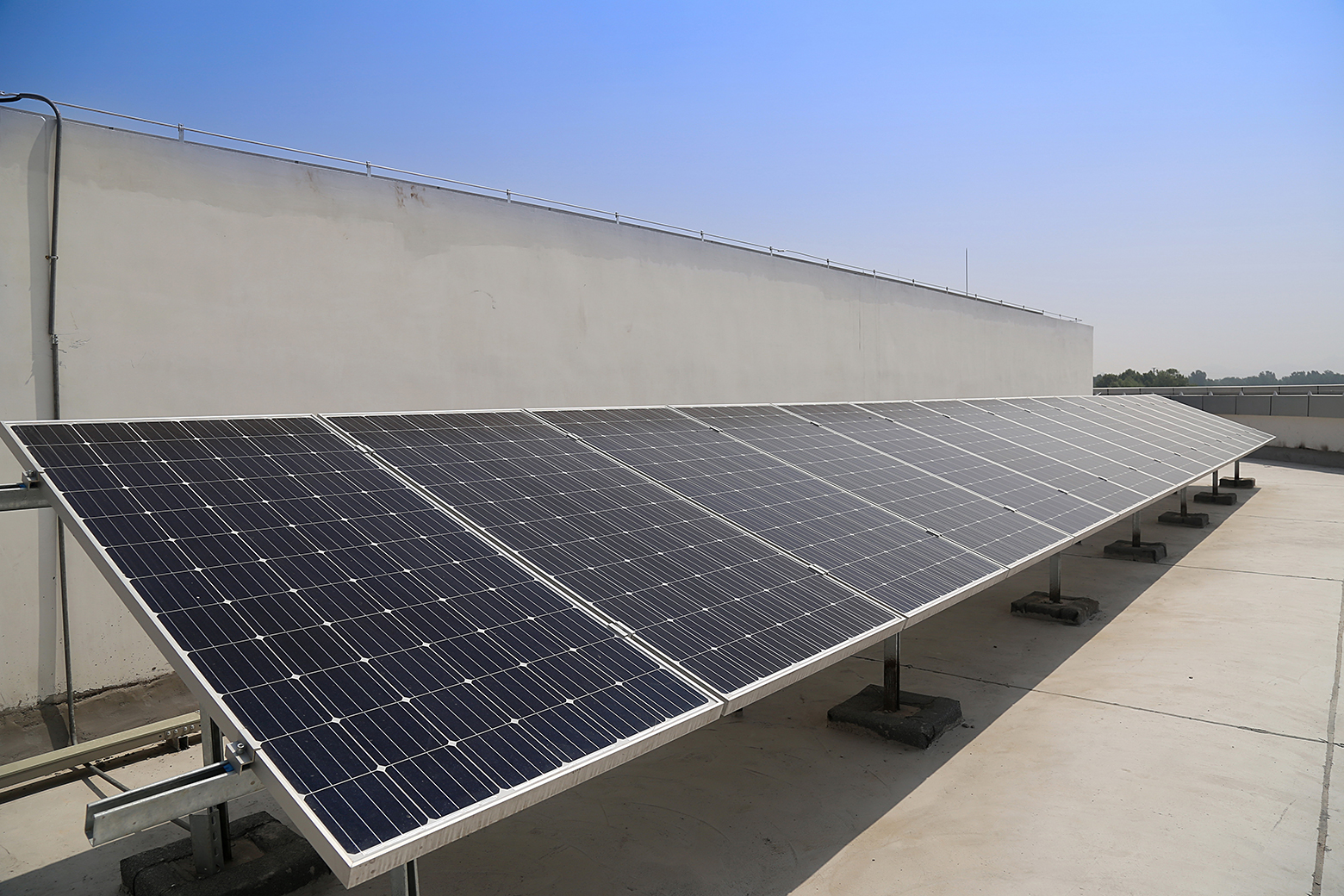
Semiconductor Facility Roofing decision points

A semiconductor fab is one of the most unforgiving buildings a commercial roofer will ever work on. Inside, billions of dollars of tools manufacture features measured in nanometers in cleanrooms where a stray particle, a trace of moisture, or a few microns of unwanted vibration can scrap a wafer or knock a tool out of calibration. The roof over that environment is not a commodity — it is part of the contamination-control envelope, the vibration budget, and the business-continuity plan at once. Roofing a fab follows rules that look nothing like a distribution center, and central Ohio is now building these facilities at a scale the region has never seen.

What gets verified on the roof

The catalyst is Intel's Ohio One campus — the "Silicon Heartland" project rising in New Albany and Licking County — joined by Honda and the Honda–LG advanced-manufacturing and EV-battery roof plans anchored around Marysville, and a growing chip-and-supplier corridor across the New Albany and Licking County growth zone. These plants sit in ASHRAE/IECC climate zone 5A, absorb ~65–70 freeze-thaw cycles a year, carry real winter snow load, and stand on the eastern fringe of the Midwest hail belt where spring and summer storms can drop 1-inch-plus hail. A fab roof has to defeat all of that while production runs continuously underneath it, with zero tolerance for water intrusion that would be a nuisance anywhere else and a catastrophe here.

How the Columbus property context affects the scope

Industry work is shaped by uptime, safety, public access, sanitation, tenant coordination, loading activity, equipment sensitivity, and documentation requirements.

What ownership receives

The scope is written for the way the operation actually runs, with enough detail to coordinate shutdowns, access, tenant notices, safety, and budget approvals.

Questions

Semiconductor Facility Roofing questions

How do you keep roof work from vibrating sensitive tools in an operating fab?

We design the assembly and the methods around the facility's vibration limits. Where structural and wind requirements allow, we use fully-adhered membranes over adhered or specially-attached insulation to eliminate most percussive fastening, and we use cold-applied and self-adhered details. When fastening or demolition is unavoidable, it's scheduled into approved windows with real-time vibration monitoring against the thresholds your metrology team sets, and crews pause when a sensitive tool is in a critical run.

Can roofing debris really contaminate a cleanroom?

Yes — that's why FOD and contamination control are written into the protocol. Cleanrooms draw air through makeup-air units and intakes on the roof, so scrap, fibers, fasteners, dust, and fumes near those intakes can be pulled into the process environment. We establish clean-work buffers around intakes, capture debris continuously, use low-VOC products, control FOD with tethered tools and magnetic sweeps, and coordinate intake shutdowns or shrouding around active work.

Why does a fab roof need redundant waterproofing when other buildings don't?

Because the consequence of a single failed detail is so severe. Over a fab or subfab, a leak can corrode tools, trip interlocks, contaminate a process, and halt a line whose downtime is enormously expensive. Fab roofs also carry far more penetrations than typical buildings, so critical curbs, pipes, and the areas over process space get layered detailing plus electronic leak detection so no single point of failure reaches the floor below.

Talk through semiconductor facility roofing.

Share the building address, roof history, current concern, timing, and access constraints. We will give you a practical next step for inspection, repair, maintenance, coating, or replacement planning.

Contact Commercial Roofers of Columbus